“about crops” search results (2000)

Yunnan coffee is a beverage crop with high economic value.
The western and southern parts of Yunnan Province are located between 15 N and the Tropic of Cancer, most of which are 1000-2000 meters above sea level. The topography is dominated by mountains and slopes, with large ups and downs, fertile soil, sufficient sunshine, rich rainfall and large temperature difference between day and night. These unique natural conditions form the special taste of Yunnan small-grain coffee, which is strong but not bitter, fragrant but not strong, slightly fruity. As early as fifty years
2016-01-08 Boutique coffee beans Yunnan coffee one economy value high beverages crops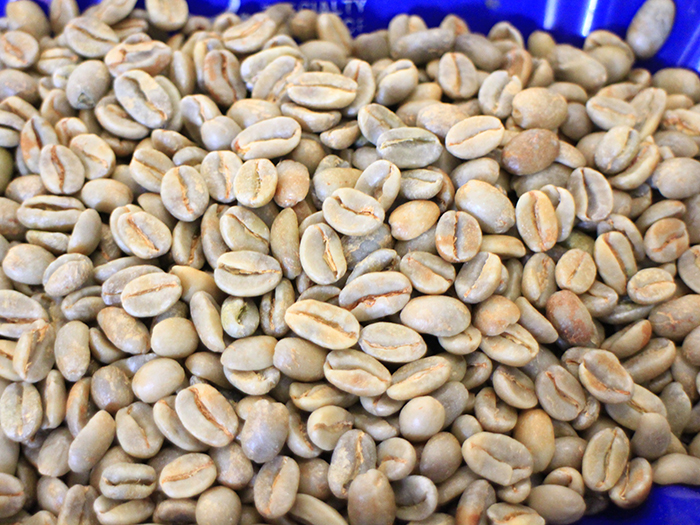
Raw beans of Ethiopian Sidamo Coffee treated with Water washing G2 Grade imported Coffee unbaked beans
Today, there are still a large number of wild Arabica coffee trees growing in many parts of Ethiopia, averaging between 4200 and 6800 feet above sea level. Now there is a trend of small cultivation, generally planting banana trees for shade at the same time, but due to lack of agricultural technology, herbicides and pesticides are less used. Coffee is Ethiopia's main economic crop and the largest in the country.
2016-04-13 Ethiopia Dharma coffee raw beans washing treatment grade import roasting
Yunnan boutique coffee is a kind of beverage crop with high economic value. Yunnan boutique coffee is characterized by cloud.
The western and southern parts of Yunnan Province are located between 15 N and the Tropic of Cancer, most of which are 1000-2000 meters above sea level. The topography is dominated by mountains and slopes, with large ups and downs, fertile soil, sufficient sunshine, rich rainfall and large temperature difference between day and night. These unique natural conditions form the special taste of Yunnan small-grain coffee, which is strong but not bitter, fragrant but not strong, slightly fruity. As early as fifty years
2016-03-19 Yunnan boutique coffee one economy value high beverage crop characteristic
Boutique coffee common sense coffee raw beans the difference between new beans and old beans
After dry and wet processing, coffee fruit becomes coffee raw bean (Raw bean/Green bean). The main components of raw beans are: carbohydrates, about 49%; moisture, about 12%; protein. About 11%; chlorogenic acid, about 7.6% alkaloids and trace elements, about 0.4%. According to the length of time, raw beans can be divided into: seasonal beans (Current Cro)
2014-11-11 Coffee knowledge coffee common sense coffee raw beans new beans old beans
High-quality coffee raw beans: the difference between new beans and old beans
After dry and wet processing, coffee fruit becomes coffee raw bean (Raw bean/Green bean). The main components of raw beans are: carbohydrates, about 49%; moisture, about 12%; protein. About 11%; chlorogenic acid, about 7.6% alkaloids and trace elements, about 0.4%. According to the length of time, raw beans can be divided into: seasonal beans (Current Cro)
2015-06-01 Boutique coffee raw beans new beans old beans fruit pass dry and wet
Coffee raw beans: the main components of raw beans between new beans and old beans
After dry and wet processing, coffee fruit becomes coffee raw bean (Raw bean/Green bean). The main components of raw beans are: carbohydrates, about 49%; moisture, about 12%; protein. About 11%; chlorogenic acid, about 7.6% alkaloids and trace elements, about 0.4%. According to the length of time, raw beans can be divided into: seasonal beans (Current Cro)
2015-09-15 Coffee raw beans new beans old beans mainly coffee fruit after
Single boutique boutique Burundian Burundi Brundi Champion processing Factory Kayanza province boutique coffee
Coffee is Ethiopia's main economic crop and the country's largest crop export and important industry. It accounts for 60% of Ethiopia's total export value and supports many small farms, as well as sugar, bananas and cotton. It is also Ethiopia's largest and important commodity export crop after oil, and it is also the largest export of Elaraby in Africa, in 1997.
2016-07-08 Single boutique Burundi Brunei Champion processing Plant Card
The main components of raw beans are new beans and old beans.
After dry and wet processing, coffee fruit becomes coffee raw bean (Raw bean/Green bean). The main components of raw beans are: carbohydrates, about 49%; moisture, about 12%; protein. About 11%; chlorogenic acid, about 7.6% alkaloids and trace elements, about 0.4%. According to the length of time, raw beans can be divided into: seasonal beans (Current Cro)
2015-10-13 Raw beans mainly divided into new beans old beans coffee fruit after dry and wet
Coffee raw beans: the difference between new beans and old beans
Coffee raw beans: the coffee fruits of new beans and old beans are processed by dry and wet methods, and then become coffee raw beans (Raw bean/Green bean). The main components of raw beans are: carbohydrates, about 49%; moisture, about 12%; protein. About 11%; chlorogenic acid, about 7.6% alkaloids and trace elements, about 0.4%. According to the length of time, raw beans can be specific.
2015-10-15 Coffee raw beans new beans old beans coffee
Boutique coffee beans common sense how to distinguish between new beans and old beans
After dry and wet processing, coffee fruit becomes coffee raw bean (Raw bean/Green bean). The main components of raw beans are: carbohydrates, about 49%; moisture, about 12%; protein. About 11%; chlorogenic acid, about 7.6% alkaloids and trace elements, about 0.4%. According to the length of time, raw beans can be divided into: seasonal beans (Current Cro)
2014-11-20 Coffee knowledge boutique coffee bean common sense new beans old beans
Fine coffee learn the difference between new beans and old beans of raw coffee
After dry and wet processing, coffee fruit becomes coffee raw bean (Raw bean/Green bean). The main components of raw beans are: carbohydrates, about 49%; moisture, about 12%; protein. About 11%; chlorogenic acid, about 7.6% alkaloids and trace elements, about 0.4%. According to the length of time, raw beans can be divided into: seasonal beans (Current Cro)
2014-09-29 Coffee knowledge boutique coffee science coffee raw beans new coffee beans old coffee beans
Grade G1 original species of snow caffeine from Worka estate in Waka, Ethiopia
Today, there are still a large number of wild Arabica coffee trees growing in many parts of Ethiopia, averaging between 4200 and 6800 feet above sea level. Now there is a trend of small cultivation, generally planting banana trees for shade at the same time, but due to lack of agricultural technology, herbicides and pesticides are less used. Coffee is Ethiopia's main economic crop and the largest in the country.
2016-07-08 Ethiopia Waka Worka Manor Yega Sheffield Chefe Native
Coffee training knowledge: coffee raw beans: the difference between new beans and old beans
Coffee raw beans: the difference between new beans and old beans. After dry and wet processing, coffee fruit becomes coffee raw bean (Raw bean/Green bean). The main components of raw beans are: carbohydrates, about 49%; moisture, about 12%; protein. About 11%; chlorogenic acid, about 7.6% alkaloids and trace elements, about 0.4%. According to the length of time, raw beans can have
2014-10-08 Coffee knowledge coffee training coffee raw beans coffee encyclopedia
Coffee knowledge introduces the distinction between raw beans, new beans and old beans
After dry and wet processing, coffee fruit becomes coffee raw bean (Raw bean/Green bean). The main components of raw beans are: carbohydrates, about 49%; moisture, about 12%; protein. About 11%; chlorogenic acid, about 7.6% alkaloids and trace elements, about 0.4%. According to the length of time, raw beans can be divided into: seasonal beans (Current Cro)
2014-12-30 Coffee knowledge introduction raw beans new beans old beans distinction coffee fruit pass
Boutique Coffee all kinds of common sense about fine coffee
It was said before that among the factors that affect the taste of a cup of coffee, raw beans account for 60%, roasting accounts for 30%, and production accounts for 10%. This is a general analysis, so throughout the life process of coffee beans, the factors that from crop to cup affects the taste of a cup of coffee can be infinitely refined. The first is the variety. Sow melon, reap beans, no matter whether it is to plant melons or beans, seed selection is the most important, of course I
2014-11-19 Coffee knowledge boutique coffee science boutique coffee common sense
Country: water washing treatment variety Heirloom in G2 Sidamo, Ethiopia
Today, there are still a large number of wild Arabica coffee trees growing in many parts of Ethiopia, averaging between 4200 and 6800 feet above sea level. Now there is a trend of small cultivation, generally planting banana trees for shade at the same time, but due to lack of agricultural technology, herbicides and pesticides are less used. Coffee is Ethiopia's main economic crop and the largest in the country.
2016-06-20 Country Ethiopia Dharma producing area washing treatment Variety Heirlo
Introduction to the characteristics of Coffee Flavor description varieties in Xida Mochizo producing area
Ethiopian coffee is mostly in the sun, but now it seems to have changed in recent years, and the boutique coffee movement has made people's mouths more and more picky. Less gossip, the aroma is obvious: according to Westerners, it is rose tea, but I think it is more like the taste of brown sugar and ginger soup, as well as the tonality of honey and oranges. This one is obviously purer than other Sidamo.
2016-09-19 Taste thin Dharma Shaquiso producing areas Coffee Flavor description varieties characteristics
Coffee raw beans: the difference between new beans and old beans
Coffee training knowledge: coffee raw beans: new beans and old beans. After dry and wet processing, coffee fruit becomes coffee raw bean (Raw bean/Green bean).
2014-05-16 Coffee knowledge coffee beans coffee raw beans
Ethiopia Yega Xuefei is close to the floral taste and is wilder, sweeter and thicker than the coffee bean market.
Today, there are still a large number of wild Arabica coffee trees growing in many parts of Ethiopia, averaging between 4200 and 6800 feet above sea level. Now there is a trend of small cultivation, generally planting banana trees for shade at the same time, but due to lack of agricultural technology, herbicides and pesticides are less used. Coffee is Ethiopia's main economic crop and the largest in the country.
2016-04-19 Ethiopia Yega Sheffield close fragrant taste wild sweet thick
More than half of the coffee shops in China do not make money from coffee.
A few days ago, a "profiteering door" news that the price of Starbucks coffee in the Chinese market is fully higher than that in the United States, causing widespread debate in the society. There are doubts that Starbucks' differential pricing is contrary to the principle of fairness, but there is also a view that calculating only the cost of raw materials while ignoring other operating costs obviously lacks economic common sense, coffee belongs to a non-monopoly industry, and its pricing power should be vested in the market and
2014-08-20 Coffee news coffee shop operation profit